
Tallaght University Hospital

Patient Information
John's Campaign - carers are welcome

John’s Campaign was started after Dr. John Gerrard passed away in 2014 following a long hospital stay in the UK. His family wanted to improve how hospitals treat carers, people who look after loved ones. To learn more this campaign please visit Johnscampaign.org.uk Tallaght University Hospital (TUH) supports this campaign. It means carers (like a partner, family member, or friend) are welcome to be with their loved one in hospital and help support them, as agreed with the care team. Email: johnscampaign@tuh.ie.
What can carers do? Carers can help by:
Carers are not expected to do the jobs of hospital staff, and they may not always be able to stay due to other responsibilities.
Carers vs. Visitors Carers are different from regular visitors. They can come outside normal visiting hours, but they still need to follow hospital rules. If a patient did not have a carer before coming to hospital, normal visiting hours apply. What is the Carer’s Passport Card? This card lets carers stay with their loved one whenever needed, even outside regular visiting times.
How to get one: Read the “Patient Healthcare Passport & Visitor Information Leaflet,” fill out the Carer’s Passport Agreement, and give it to a nurse on the ward. Important to know:
|
||||||||||||||||||||||||||||||||||||||||||||||||||||||||||||||||||||||||||||||||||||||||||||||||||||||||||||||||||||||||||||||||||||||||||||||||||||||||||||||||||||||||||||||||||||||||||||||||||
Neurodivergent Patients
Neurodivergence is a term used to describe differences in how people feel, think, and perceive the environment. It includes a broad spectrum of neurological disorders, such as autism, Tourette syndrome, ADHD, Down syndrome and dyslexia. Recognising the diverse needs of neurodivergent patients, the Hospital have developed some training materials for staff and those working in Healthcare on Autism. The Hospital has also published a podcast series on Down syndrome, the five part series looks at what Down syndrome is, common health issues and the importance of health screening from the age of 35. Autism 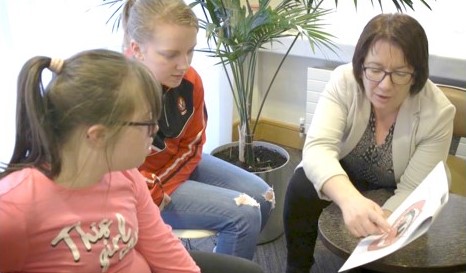
Produced in conjunction with AsIAm, this educational eLearning programme provides evidence based knowledge about autism for healthcare professionals interacting with autistic children and adults in an acute hospital setting. Autistic patients attending the adult services at TUH will now benefit from improved accommodation of their specific needs, a more knowledgeable workforce and a calmer hospital experience. The education programme was produced with the support of TUH and the Nursing and Midwifery Planning and Development Unit in the HSE. It is 40 minutes long and is available to healthcare professionals through HSELand (the health service’s online development portal). You can watch a brief extract via this link
Our Emergency Department has implemented innovative strategies to support the patient experience. Central to this initiative is the development of comprehensive guidelines for staff, equipping them with the necessary tools to effectively communicate with patients who identify as neurodivergent. These guidelines encompass a range of communication strategies tailored to individual needs, fostering a supportive and understanding environment from the moment patients enter the ED. The Hospital is steadfast in its commitment to advancing neurodiversity-friendly practices. By prioritising education, training, and ongoing evaluation, the Hospital aims to continually refine its approach and ensure that every patient receives the compassionate and inclusive care they deserve. One significant step taken by the ED is the establishment of a dedicated sensory room. Sensory challenges, such as sensitivity to light and noise, can exacerbate stress and anxiety for neurodivergent individuals in busy ED environments. The sensory room provides a calming space, offering a respite from overwhelming stimuli and promoting relaxation. This innovative approach not only demonstrates a commitment to accommodating diverse sensory needs but also underscores the Hospital's dedication to enhancing the overall patient experience. You can read more about it here. Down Syndrome Each episode of the Let’s Talk About Down Syndrome series is targeted at individuals with Down syndrome, their families and carers, health and social care staff and anybody who has an interest in the health needs of adults with Down syndrome in Ireland. The series is hosted by Geraldine Kyle, a registered nurse tutor in TUH and mother of a young adult with Down syndrome. Episode #1 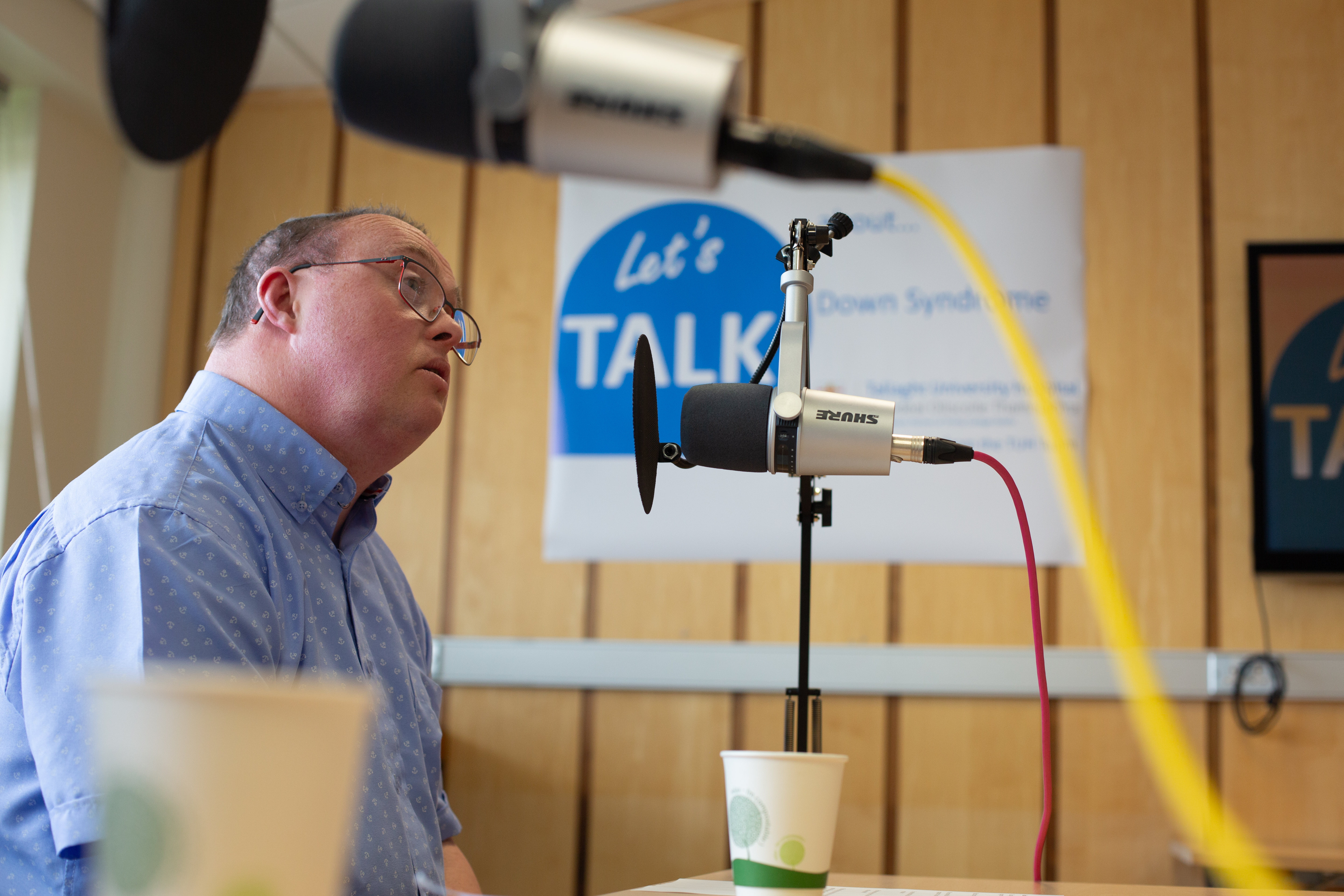
Nicola Hart, National Research & Support Specialist of Down syndrome Ireland and Ross O’Neill, Junior Administrator in Down syndrome Ireland speak to Geraldine and share valuable insights about the lived experience of someone living with Down syndrome and important communication strategies that healthcare staff should be aware of.
Transcript for the episode is located at this link Check out the information and resources available at Down syndrome Ireland (DSI) at www.downsyndrome.ie Which also has information for healthcare professionals in supporting adults with Down syndrome in hospital. Episode #2  In this episode Geraldine is joined by Fiona McGrane, Clinical nurse Specialist in Down syndrome in Children’s Health Ireland and discusses the common health needs of people with Down syndrome and the importance of a smooth transition from the children to adult services, sharing some practical advice to parents / carers.
Transcript for the episode is located at this link Check out “The Medical Management Guidelines for Children and Adolescents with Down syndrome in Ireland” at Down syndrome Ireland - Health Episode #3
Fran Kane, a member of the TUH Patient Community Advisory Council and a mother of a young adult with Down syndrome and Suzanne Kennedy, Acute Intellectual Disability Liaison Nurse in TUH discuss some of the important issues that face people with Down syndrome accessing hospital services. They stress the importance of effective communication and how helpful the HSE Health Passport can be in the healthcare journey in hospital.
Transcript for the episode is located at this link Check out information about the HSE Health Passport A free App version can be downloaded to your smart phone from wherever you get your Apps. TUH Easy Read Resources Episode #4
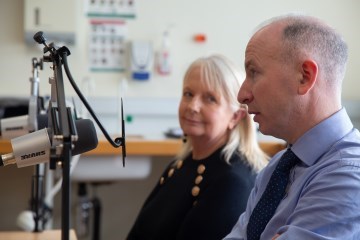
Professor Seán Kennelly, Consultant Geriatrician & Clinical Director of the National Intellectual Disability Memory Service and his colleague Evelyn Reilly, Advanced Nurse Practitioner in the National Intellectual Disability Memory Service join Geraldine to discuss the relationship with dementia and Down syndrome and its prevalence. They also talk about what people should be aware of when considering the risks of dementia in people with Down syndrome, very practical advice on how to mind the brain as people with Down syndrome age.
Transcript for the episode is located at this link Read more about the Memory Clinic in TUH Read more about Delirium Read more about Horizon 21 Episode #5
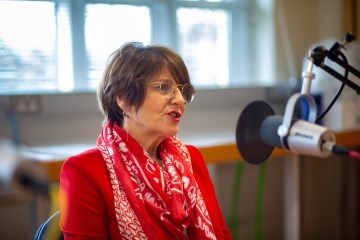
Professor of Ageing & Intellectual Disability at Trinity College Dublin Mary McCarron discusses with podcast host Geraldine Kyle the results of the Intellectual Disability Supplement to the Irish Longitudinal Comparative Study on Ageing. In this final episode she shares her thoughts on important ways that healthcare staff can support the health needs of people with Intellectual Disability including Down syndrome.
Transcript for the episode is located at this link
Check out the IDS TILDA reports and infographics Check out IDS TILDA education resources Check our IDS TILDA wave 5 Easy Read |
||||||||||||||||||||||||||||||||||||||||||||||||||||||||||||||||||||||||||||||||||||||||||||||||||||||||||||||||||||||||||||||||||||||||||||||||||||||||||||||||||||||||||||||||||||||||||||||||||
Public Wifi
TUH Public WiFiThe Public Wi-Fi system at TUH is provided free of charge as a value added service to patients, visitors, and business partners of the Hospital. This Terms of Use apply from when we accept your request for Service. Please read the terms carefully before activating the Service with us. Each session will expire after eight hours.
This notice sets out the terms and conditions on which wireless internet access (“the Service”) is provided to you. All persons accessing the TUH Guest wireless network must abide by all hospital policies and will note that all access is recorded and will be submitted upon request to any legitimate law enforcement agencies.
Please be aware, the Service is provided without warranty or support and that you may experience congestion at certain peak times. The Service is provided without encryption and is not classified as a secure means of access. Therefore users access the Service at their own risk. TUH is not responsible for the loss, misuse or theft of any information, passwords or other data transmitted by users through the Hospital Guest wireless network. You assume all responsibility and risk for use of the service.
Security TUH does not guarantee the security, the confidentiality or the integrity of the user's information on the Hospital Guest wireless network.
Providing services
Use of Service The service is made available provided:
This list is not exhaustive
Content disclaimer
TUH reserves the right to amend these terms of use at any time. |
||||||||||||||||||||||||||||||||||||||||||||||||||||||||||||||||||||||||||||||||||||||||||||||||||||||||||||||||||||||||||||||||||||||||||||||||||||||||||||||||||||||||||||||||||||||||||||||||||
Department & Ward Telephone Numbers
Department Phone NumbersBelow is a list of useful telephone numbers, including Hospital Departments, out-patients clinics, wards.
|
||||||||||||||||||||||||||||||||||||||||||||||||||||||||||||||||||||||||||||||||||||||||||||||||||||||||||||||||||||||||||||||||||||||||||||||||||||||||||||||||||||||||||||||||||||||||||||||||||
A Statement of Information Practices at Tallaght University Hospital
What we do with your informationEveryone working for Tallaght University Hospital has a legal duty to keep information about you confidential. This document explains why we ask for your personal information, how that information will be used and how you can see your information.Why is Information recorded about meYour doctor and other health professionals caring for you keep records about the treatment you receive. This may be written down (manual records) or kept on a computer (electronic records). These records may include:1. Basic details about you, e.g. address and next of kin What is the information used for?Your records are used to ensure that we provide you with the best possible care. It is important that your health records are accurate and up-to-date as they will help make sure that any staff looking after you are able to provide you with the care that your require. Your records will also aid us with any investigation should you have a problem or concern regarding your treatment.We may also use your information to improve the services we provide to you through audits and monitoring, to pay the care provider for your treatment, aid health research and help to teach healthcare professionals. When other organisations are involved in your care we may need to share details about you to enable us to work together for your benefit. Information will only be shared with them if they have genuine need for it and where possible we will ask for your consent on this. We may share information with organisations that contribute to your health and care. These will include your
Some of your personal information may be used for statistical reporting purposes. Occasionally an independent audit (check) will take place to make sure your information is being recorded and stored accurately and securely. On the rare occasions where it is essential to include personal identifiable information we will ask for your consent before this information is shared. Can I see my information?The Freedom of Information Act and the Data Protection Act allow you to find what information is held about you on computer and on certain manual records. If you use our self service touch screens you will see some of the information that we hold about you.In certain circumstances access to your records may be limited, e.g. if it is felt to be in your best interest or for the protection of others. If you wish to see a copy of the records that we hold about you then we should write to the Freedom of Information Office, Tallaght University Hospital, Dublin 24. If you wish to make a complaint then you may write to our Patient Advocacy department at the Hospital. How can I make a complaint about the way my information is managed?If you wish to make a complaint you may do so by writing to the Patient Advocacy Department or e-mail to patient.advocacy@tuh.ie We endeavour to acknowledge your complaint within five working days and complete the process within 30 working days.Occasions when your information needs to be disclosed include:1. When the health and safety of others is at risk We are required by law to report certain information to appropriate authorities. This is only provided after permission has been given by a qualified health professional. Anyone who receives information from the hospital has a legal duty to keep it confidential. Please advise a staff member involved in your care if there is information you do not wish us to share. Further informationIf you would like to know more about how we use your information or for any reason you do not wish to have your information used in any of the ways described, please speak to the health professionals concerned with your care.Further information on your Medical Healthcare Record can be found here. Guidance about data protection can be obtained from the Data Protection Commissioner website at www.dataprotection.ie |
||||||||||||||||||||||||||||||||||||||||||||||||||||||||||||||||||||||||||||||||||||||||||||||||||||||||||||||||||||||||||||||||||||||||||||||||||||||||||||||||||||||||||||||||||||||||||||||||||
Hospital Facilities
The Hospital provides a number of facilities for patients and visitors. For further information on these services, please read below. An ATM machine is located in the atrium beside the shop. Bed and Breakfast Canteens & Coffee Shops A shop located in the main entrance hall of the Hospital where you can buy confectionary, soft drinks, ice cream newspapers, magazines, puzzle books greeting cards, toys (small selection) and toileteries. Opening hours are from 7am – 9.30pm Monday to Friday and 7am-8pm Saturday, Sunday & Bank Holidays. The BaxterStorey Coffee Shop is open in the main atrium from 7am – 9:30pm Monday to Friday and 9am-8pm Saturday, Sunday & Bank Holidays. The 'Oasis' coffee shop is located in the reception area of the main entrance hall. It is staffed by volunteers - is open from 10am - 3pm Monday, Tuesday, Wednesday, Thursday and 10am - 1pm every Friday. Comments, compliments and complaints Mass Times/Pastoral Care The Hospital Chapel is located on the ground floor. To request a chaplain, please ask the nurse on duty to make contact. Mass Services and Liturgies in the Hospital Chapel Sunday:
Monday to Friday
Roman Catholic Ministers of the Eucharist visit the wards:
Muslim prayer on a Friday takes place in the Quiet Room between 1:30pm and 2pm. Meals (for patients) Please ask the ward staff if you are not sure what you are allowed to eat or drink. Medicines We have pharmacists who will answer your questions and give you information about your medicines. Please ask us to explain if there is anything you don't understand. Medical Certificates Medical Record Parking Car park charges:
As we do not have the space to offer free parking to patients who have to stay in the hospital for a long period of time, we suggest that, where possible, you arrange with someone to bring you to and collect you from the hospital. Paying Your Bill Postal Service Security Security Officers manage traffic control and routinely patrol all areas of the buildings and grounds. Shop Shopping Centre Telephones We also have a 'Direct Inward Dial' service. If you take the extension of your ward and place the prefix '414' before it, the incoming call will go through directly to your ward. A list of hospital phone numbers is available here. As mobile phones can cause life support and diagnostic equipment to malfunction, we ask you not to use your mobile phones in areas where you see signs requesting that your phones be switched off. Volunteers |
||||||||||||||||||||||||||||||||||||||||||||||||||||||||||||||||||||||||||||||||||||||||||||||||||||||||||||||||||||||||||||||||||||||||||||||||||||||||||||||||||||||||||||||||||||||||||||||||||
Patient Charges
Paying Your Hospital BillThere are a number of ways to pay your hospital bill. 1) Pay Online - click this link to pay hospital bill To use online payments you will need:-
a) Patients Hospital Number which is shown on the invoice
b) Patients Date of Birth
c) Credit/Debit Card details
6) If you are in the Hospital and have your bill and bank card you can pay your bill at the reception desk in the main atrium. Hospital ChargesEmergency Department: €100 Charges for multi occupancy and single occupancy accommodation are recoverable from the following insurance schemes: 1. VHI – please check what your plan covers you for. ALL INSURANCE FORMS MUST BE COMPLETED ON ADMISSION Non-EU Resident Visitors Statutory Charge Exemptions:
|
||||||||||||||||||||||||||||||||||||||||||||||||||||||||||||||||||||||||||||||||||||||||||||||||||||||||||||||||||||||||||||||||||||||||||||||||||||||||||||||||||||||||||||||||||||||||||||||||||
Infection Control
How You Can Help?
However it is important for patients, visitors and staff to wash their hands with soap and water if they are soiled after visiting the toilet and if staff advise to do so. If you have, or have had a health care associated infection in the past such as MRSA, please inform your admitting nurse or doctor.
Please click here for further information on Infection Prevention & Control. |
||||||||||||||||||||||||||||||||||||||||||||||||||||||||||||||||||||||||||||||||||||||||||||||||||||||||||||||||||||||||||||||||||||||||||||||||||||||||||||||||||||||||||||||||||||||||||||||||||
My Medicines
The Zero Harm Patient Safety leaflet is part of a Tallaght University Hospital Zero Harm patient safety initiative, focussed on reducing medicine-related harm through innovation and public information. Adverse drug events can lead to profound and devastating effects on patients and their carers, in addition to prolonged and more intensive hospital care. Tallaght University Hospital is tackling this by focusing on a series of initiatives to help improve medication safety. This leaflet is part of that initiative, with the ‘My Medicines’ leaflet patients can document a list of their current medicines and supplements. This is their record of their medicines. The record should be kept up-to-date and brought with them when attending Tallaght University Hospital or any healthcare appointment. If they become ill, they or a member of their family can bring this record to hospital. Please encourage your patients to use this leaflet and share with any family members or carers of patients you think might benefit from its use. |
||||||||||||||||||||||||||||||||||||||||||||||||||||||||||||||||||||||||||||||||||||||||||||||||||||||||||||||||||||||||||||||||||||||||||||||||||||||||||||||||||||||||||||||||||||||||||||||||||
What to Bring to Hospital
On Day of Admission: What Do I Bring?
Please Do Not Bring?
|

