
Tallaght University Hospital

Infection Prevention & Control
Contact Names/Number
| Phone | 01 – 414 3938 |
The Infection Prevention & Control Team is located in the Rynd Building on the ground floor.
The Infection Prevention and Control Nurses are available Monday to Friday 7:30am to 4pm.
The Consultant Microbiologists (Infection Control Consultants) are on call 24 hours, seven days a week.
What Are We Doing ?
As you come into our hospital you will hear a voice over reminding everyone to use the hand gels provided and to wash their hands. Alcohol hand gel is available on all wards, clinical areas and outpatient departments for use by staff, patients and visitors. We use highly visible posters to raise awareness of the importance of good hand hygiene by staff, patients and visitors. Hand hygiene is the most effective method of preventing the spread of infection.
Regular cleaning ensures that micro-organisms are not allowed to build up in the environment. Extra cleaning and disinfection is carried out if there is high risk of infection.
Hand hygiene audits and environmental hygiene audits are carried out regularly throughout the hospital.
We provide training to staff on hand hygiene and the principles of infection prevention & control. This training is provided to hospital staff on orientation to the hospital and through an ongoing education programme.
We have surveillance systems to monitor Healthcare Associated Infections (HCAI) which allow us to identify risks and implement control measures to prevent spread of infection to other patients.
Patients who have HCAI which could spread to other patients are isolated in single rooms whenever possible.
Hand hygiene and the wearing of protective clothing helps to prevent the transmission of infection.
Antibiotic Stewardship is the careful management of the way we use antibiotics to ensure prudent and effective antibiotic therapy. The way a hospital uses antibiotics can have an impact on antibiotic resistance. We carefully monitor our usage of antibiotics to ensure that they are used in the most effective way possible. Our Antibiotic Stewardship Programme also aims to make sure that we do not use antibiotics unnecessarily. |
Leaflets
For further information please click on the links below Listeria Patient Information Leaflet |
How Can You Help ?
However it is important for patients, visitors and staff to wash their hands with soap and water if they are soiled after visiting the toilet and if staff advise to do so. If you have, or have had a health care associated infection in the past such as MRSA, please inform your admitting nurse or doctor.
|
Description of Department/Service
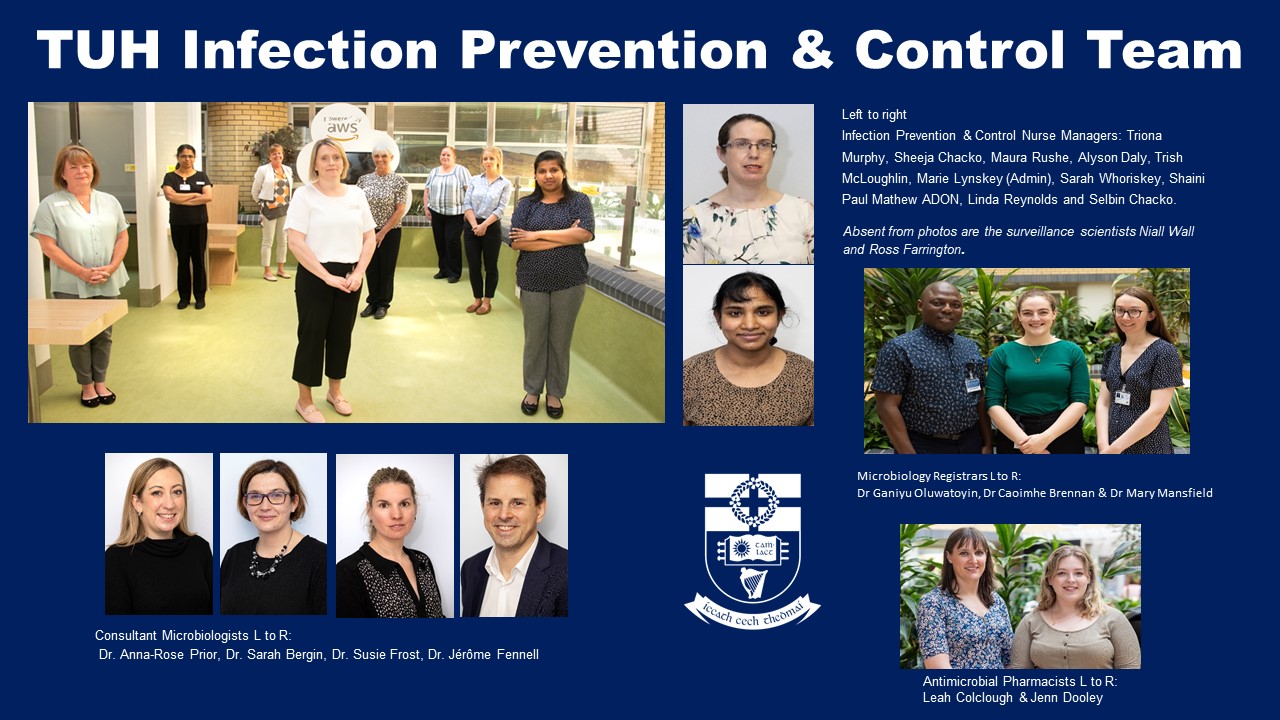
Preventing healthcare infections is a challenge for hospitals today.The Infection Prevention & Control Team (IPCT) play a key role in attaining this goal. If patients, visitors and staff adhere to correct infection prevention and control practices, then we can minimise or prevent the risk of transmission of infection to our patients, our visitors and our staff. We work as a multidisciplinary team with all healthcare workers, patients and visitors to ensure that an effective infection prevention and control service is provided. The role of the IPCT is to promote best infection prevention and control practice in order to ensure the delivery of a quality service for patients, visitors and staff. Some of the key functions of the team include:
The IPCT give advice on infections and how to prevent them but it is the responsibility of everyone - staff, patients and visitors to ensure that infection prevention and control practices are followed very carefully. |
COVID 19 Information
Below are links to materials created by services in TUH which might be helpful for you or a loved one. Please note they are not listed in any particular order. As materials are developed across our services we will continue to add to the content. There are also links where the most update information is available from the HSE and World Health Organisation. Information from TUH Services General Information on COVID-19 Advice from the Alzheimer Society including a activity guide and a collation of online resource supports for people with Dementia, families and carers. Minding your mental health during COVID-19 Common questions about COVID-19 answered by the World Health Organisation |